Showing posts with label Glossy Ibis. Show all posts

Tuesday, 9 September 2025

Red-backed Shrikes

My first stop of the morning was to try and get more views of the American Golden Plover at Jury's Gap however, on checking the field used by the plover and the flock of Golden Plovers there wasn't a plover to be seen and not in the adjacent fields either. The bushes along the Sand Pit track held 6 Chiffchaffs and a couple of Blackbirds otherwise fairly light on other birds. I then headed to Boulderwall to wander the access track before the reserve gate opened and managed to see the 5 Glossy Ibis that were still mostly elusive feeding in ditches unless they flew about. On reaching the viewing mound I came across a couple from the BBC. They were recording introductions to classical music. I didn't realise or know that it was Dr Sian Williams who presents Classical Unwind on Radio 3, apparently a well known broadcaster. I stood quietly with them for a short while as they asked me for any information on the bird calls that they could hear to add extra information to the introductions. Whilst I remembered to put my phone on silent, my radio was still on full volume and a call came in from Martin which caused me to apologise for the noise and beat a hasty retreat.

Glossy Ibis

A Red-backed Shrike had been found by James near the Craters to the north of the Long Pits, so that was my next stop. My arrival was timed badly as a couple walked their dog through the gorse patch which the bird was favouring. Despite continuing to push the shrike further away from the observers as they continued their walk, totally oblivious to the birdwatchers. The bird eventually returned to the same location but remained wary.


Juvenile Red-backed Shrike at the Craters

After a short visit to the Bird Observatory, a message came through that another Red-backed Shrike had been found along the RSPB Access track. Whilst watching the shrike, Charlotte radioed that a flock of White Storks were over the Trapping Area and these eventually headed north east out to sea. 

The Red-backed Shrike on the reserve was more confiding and remained within a triangle of gorse and elderberry between the track and the Discovery Area. Unfortunately its right eye was missing and it had a deformed bill but had lovely well defined barring.


Juvenile Red-backed Shrike RSPB Reserve

The flock of White Storks comprised 61 birds, distant in the heat haze and riding the thermals.

Part of the White Stork flock

The flock of 61

Monday, 8 September 2025

Glossy Ibis and Montagu's Harrier

A productive early morning wander around the north east side of the Long Pits recorded: 6 Whinchats, 2 Spotted Flycatchers, 23 Willow Warblers,  25 Chiffchaffs, 2 Reed Warblers, 2 Sedge Warblers, 43 Blackcaps, 5 Reed Buntings, 6 Yellow Wagtails, 2 Grey Wagtails, 24 Robins, 2 Wheatears,  a Green Woodpecker, 13 Whitethroats and 6 Lesser Whitethroats.

Martin who was at Jury's Gap messaged that 15 Glossy Ibis were heading towards the Point over the RSPB Reserve. I'd just returned to my car at the top of the Long Pits and was able to get some height as Jacob radioed that they were over the Trapping Area. There were 14 over the Trapping Area so bizarrely we had lost one in-between.

14 Glossy Ibis over the Trapping Area

In the early afternoon, Graham and Nicky found 8 Glossy Ibis at Boulderwall on the RSPB Reserve, so I headed there to find a huddle of locals checking photos taken by Graham. Turns out he had seen and photographed a ringtail harrier which looked to be either a Pallid or Montagu's. The harrier had flown over Boulderwall Fields in the direction of the Chicken Sheds along Dengemarsh Road. As I could get to that area quickly in my car along the bridleway I decided to head off to check the Hayfields and Dengemarsh area to see if the harrier was still around. Scanning the Hayfields, Lydd Fields and MOD land I could only see a Marsh Harrier and also saw Richard who had driven round to Springfield Bridge. I started to walk back towards Hayfield 3 from the Flood field and picked up the small harrier at the eastern end of Hayfield 3 flying towards Dengemarsh Road. With some excitement, I radioed out what the harrier was doing and then took loads of photos, nearly all of which are too blurry and useless but I have managed to salvage the ones below. Also check out Martins blog (Ploddingbirder) for one of Grahams photos of the Montagu's Harrier.

The locals who were still at Boulderwall, drove round to Springfield Bridge and Martin headed to Dengemarsh. The harrier was lost to view beyond the gorse line on the MOD land along Dengemarsh Road but Martin picked it up and was able to follow it for a while before it was lost to view again. Martin then drove round to Springfield Bridge and after a period of no sign, picked it up flying towards the security hut at Galloways and that was the last sighting.

I took a look at the gulls roosting at Dengemarsh and picked up a preening juvenile Caspian Gull plus a single Avocet. 

On returning to Boulderwall, 5 Glossy Ibis flew up from a ditch and showed for a short while before disappearing in to a ditch again.

Juvenile Montagu's Harrier


Juvenile Caspian Gull

Monday, 23 September 2024

 Partially cloudy, morning SW F5 to F6, afternoon SSW F4 to F5, 15C to 17C, rain showers.

Today was the RSPB WeBS count so I started at the eastern end of ARC and New Diggings, working my way round to the Tower Pits, the Pines Inlet and finally Hanson Hide. With the exception of Shoveler duck numbers are much lower than in July and August. Shoveler must go through their moult a month later than Pochard and Gadwall.

I then covered Boulderwall and finally looked on Burrowes although this pit would have been already counted. On Burrowes I had three Greenshank and a single Common Sandpiper. Martin radioed through that two Spotted Redshanks had appeared on ARC so I then headed back there and whilst watching the two a third flew in calling and joined them. The adult Glossy Ibis seems to have taken up residency on ARC. No sign of any Garganey though.

In the late afternoon I did my Littlestone survey. I fear for the small wader roost using the beach, they already have a tough time trying to rest with walkers and dogs off-lead disturbing them. However, I think the planned building of a watersports centre at the Greatstone car park will be the end of the roost at the RNLI station unless there is a  planning condition not allowing watersports during the winter period. During the survey I had at least 107w Sandwich Terns along the shoreline and 20 roosting Mediterranean Gulls on the shingle with 91 offshore. Roosting waders comprised 35 Ringed Plovers, 53 Dunlin, seven Turnstone and four Sanderling.


Spotted Redshank

Glossy Ibis


Wednesday, 11 September 2024

Dungeness RSPB

Daytime, dry, sunny, 21-25mph NW, 15°C. Thunderstorm and heavy rain showers in the evening.


Burrowes Pit viewed from Firth Lookout


Thunderstorm viewed across ARC from Hanson hide

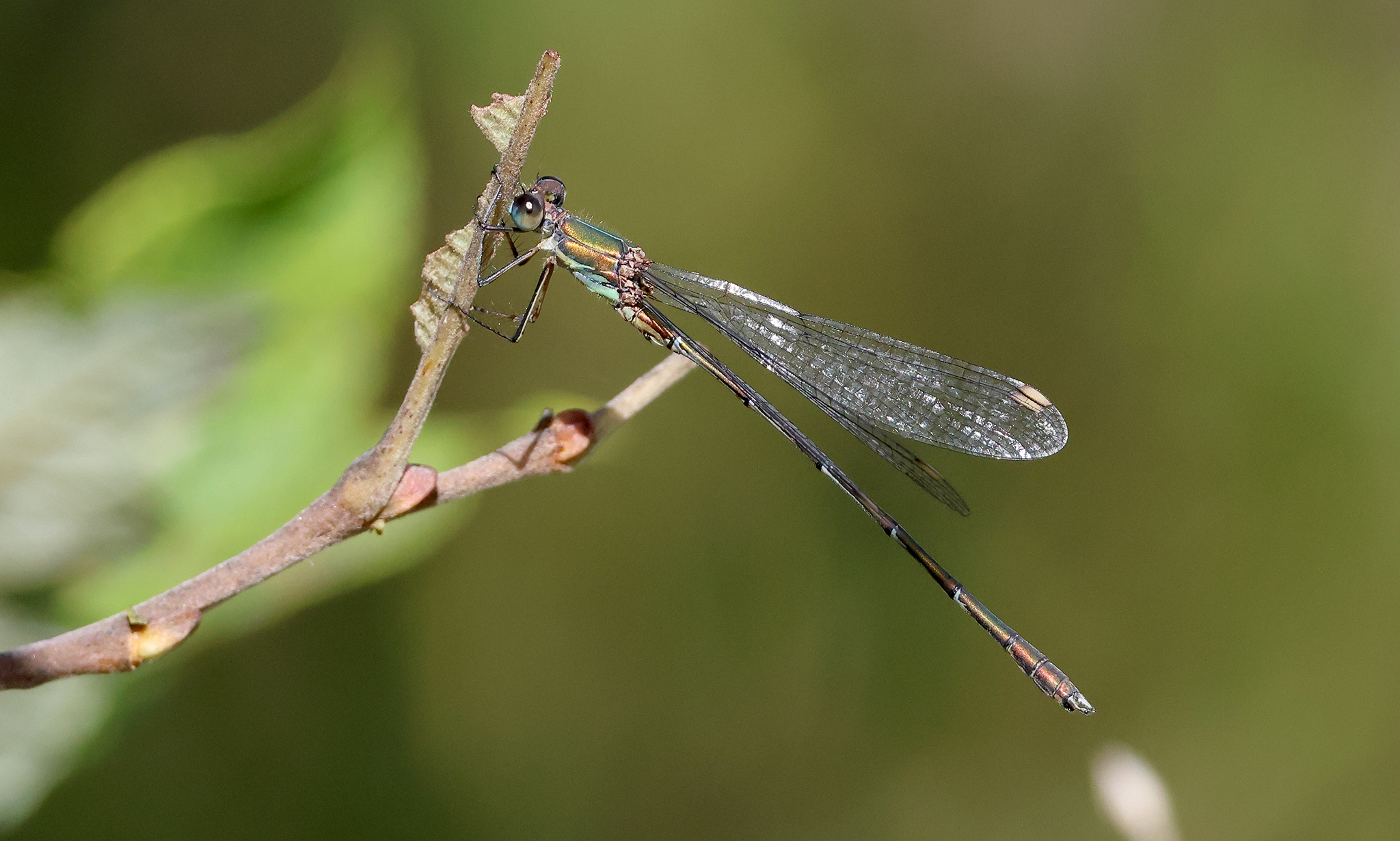
A fall of Chiffchaffs mainly recorded on the Point with reports of loads of Chiffchaffs in private gardens however, Chiffchaffs also in the willows across the RSPB reserve. The Pectoral Sandpiper and the second juvenile White-Winged Black Tern of the autumn along with 12 Black Terns remain on ARC and Burrowes Pit respectively. Two Willow Emerald damselflies were found along the Hanson Track by Dave Brown. A new damselfly species for me in the area and whilst recorded annually at the Point or Long-Pits in low numbers, a species that is scarce on the RSPB Reserve. Four Garganey and the adult Glossy Ibis on ARC and eight Cattle Egrets at Boulderwall. Duck numbers are decreasing after the high counts in July and August.
In the late afternoon a Whinchat and 12 Stonechats at the Affinity Water Works.
The sunny spells brought out some butterflies with Small Copper, Red Admiral and Small White being recorded.


This adult Glossy Ibis appeared on August 21st the previous 2024 record on the peninsula being a single on June 29th.

Juvenile Pectoral Sandpiper on ARC


Willow Emerald Damselfly

Small Copper

Our second juvenile White-winged Black Tern on Burrowes Pit.

One of the 12 Black Terns on Burrowes Pit.