Showing posts with label Pectoral Sandpiper. Show all posts

Thursday, 11 September 2025

Juvenile Pectoral Sandpiper

After another Long-tailed Skua being seen from the Fishing Boats and photographed well on the 10th September I was back there early just in case it or another decided to appear. However, it was not to be but in an hour and a half of watching, 4 Balearic Shearwaters, a Manx Shearwater, a Merlin and Marsh Harrier in off and 15 or so Arctic Skuas along with plenty of Gannets off shore made it an ok start to the day.

It was a windy and showery day and on the way home for breakfast I decided to stop off at ARC and check the area from Hanson hide. There was no-one else in the hide and I made it just in time as heavy showers kept crossing the peninsular. As there wasn't any change in birds from the previous day and there was a gap in the showers I started to close the shutters and was just about to close the last one when the heavens opened and I caught a glimpse of 4 waders flying past the open shutter and landing on one of the islands in the deluge. 3 were Ruff but the fourth was something different. Through bins and in the pouring rain it looked like a Pectoral Sandpiper. I quickly setup my scope again and confirmed my id, a juvenile Pec and put the news out to the locals. The Pec showed well but preferred to stay within a group of resting Shoveler which kept on hiding it from view. After about 40 minutes, a Hobby flying over caused most of the birds to freeze and the Pec which was standing in water to get very low down. It flew off shortly afterwards, heading to the south west and gaining height. To my knowledge it hasn't been seen in the area again.  


Pectoral Sandpiper keeping a low profile from a flyover Hobby

Balearic Shearwaters passing the Point

Manx Shearwater

Saturday, 2 August 2025

Pectoral Sandpiper

I ran my moth trap at Boulderwall Farm, Dungeness RSPB last night to allow Ella, the outgoing assistant warden and the interns a chance to trap any Marshmallow Moths as they had recently been involved in planting 700 Marshmallow plants on the reserve. On arriving just after 8:00am they hadn't checked the trap so I headed up to Burrowes to give them time. As I was the first person at Burrowes I wandered very carefully towards the front of Firth Screen so as to hopefully not flush any close waders and picked up the adult Pec Sand that was feeding on the closest island. It was very wary so I just stayed to the edge of the screening vegetation and enjoyed great views of this charming Nearctic wader. Unfortunately, it did fly to a set of islands further out on Burrowes just as other birders arrived but remained in view albeit at distance. In a few short minutes I had taken over 700 photos of the Pec!! Bonkers.....


Tuesday, 29 July 2025

Duck Counting and a Good Wader

I decided to count ducks and coot on the RSPB reserve today as I was interested to know if the numbers of moulting duck had changed significantly from earlier in the month. I counted the main pits on the reserve ARC, New Diggings, Burrowes, Dengemarsh and New Excavations, I didn't get to Kerton or Lade.

The numbers at the end of the day were:
Pochard 798
Gadwall 769
Tufted Duck 361
Mallard 111
Shoveler 75
Pintail 2
Teal 42
Red-crested Pochard 1
Garganey 2
Coot 833

Pochard numbers are down from the mid month count but Tufted and Shoveler are up and Gadwall is about the same.

On approaching the far end of ARC, I managed to flush all the duck and Lapwing roosting in the vegetation at the muddy patch there but that did make the duck easier to count as they swam further out in to more open water. As the Dungeness road can be quite dangerous to walk along, I decided to count New Diggings from inside the fence on the ARC side but then considered counting from the eastern end of ARC. As I wandered back to my car I glanced at the muddy patch and noticed a couple of waders at the waters edge which I hadn't noticed previously. On looking through my scope I was surprised to see an adult Pectoral Sandpiper and less surprised to see a Common Sandpiper.

Adult Pectoral Sandpiper with Common Sandpiper

Adult Pectoral Sandpiper


Adult Pectoral Sandpiper

The Common Tern colonies on Burrowes and Dengemarsh still have growing chicks, with 4 visible at Dengemarsh and 5 at Burrowes. There is a significant age difference between the visible chicks at Dengemarsh with one chick not far from fledging whilst others look to be less than a week old and adults seem to still be displaying. 

Common Tern chick maybe less than a week old

Common Tern chick getting close to fledging

One of the 2 Pintail on the Reserve today an odd July record

Saturday, 14 September 2024

 Weather

Light NW winds throughout the day 3 to 13 mph. Clear skies, plenty of sun daytime low of 11C, high of 18C, dry.


Burrowes Pit

Scoping the American Golden Plover

Their seemed to have been an overnight clearout of the Red-necked Phalarope, Pectoral Sandpiper, White-Winged Black Tern and the Black Terns as no news was forthcoming from the Locals or any visiting birders. The Pectoral Sandpiper was re-located at the east end of ARC along with a Ruff and Redshank. I went to Hanson hide first from which a Great White Egret and the Glossy Ibis were showing but no sign of any Garganey, four Dunlin were present.
I then went to the RSPB visitor centre to see if any of the Black Terns or White-winged Black were present but I couldn't find any looking from the visitor centre so I decided to wander along to the Firth Lookout and hadn't gone very far before Neil Burt came running along the track. Neil had found a small Golden Plover which looked very interesting and was nearer the islands in front of Dennis's Hide, so we went there to check. Neil had found an adult American Golden Plover, a smart looking bird amongst a small flock of Golden Plover and it showed well in the hazy sunshine on the nearest island to Dennis's Hide for most of the day, finally flying off around 15:00.
This bird drew in many birders as well as those looking for the other scarce species that had been in the area resulting in the Red-necked Phalarope being located in the same place as yesterday and the Pectoral Sandpiper moving back to the islands in front of Hanson Hide.
Martin picked up a 4th Cal year Caspian Gull on Burrowes whilst we were all looking at the AGP. 
Two Black Terns were still foraging on Burrowes and in the evening a juvenile Ruff appeared there along with 224 roosting Greater Black-backed Gulls of which two were ringed, J16EY and JK525.

Caspian Gull on Burrowes likely in its 4th Calendar Year


Juvenile Pectoral Sandpiper on ARC from Hanson Hide


Adult American Golden Plover on Burrowes

Male Common Darter

Male Migrant Hawker

Female Migrant Hawker

Wednesday, 11 September 2024

Dungeness RSPB

Daytime, dry, sunny, 21-25mph NW, 15°C. Thunderstorm and heavy rain showers in the evening.


Burrowes Pit viewed from Firth Lookout


Thunderstorm viewed across ARC from Hanson hide

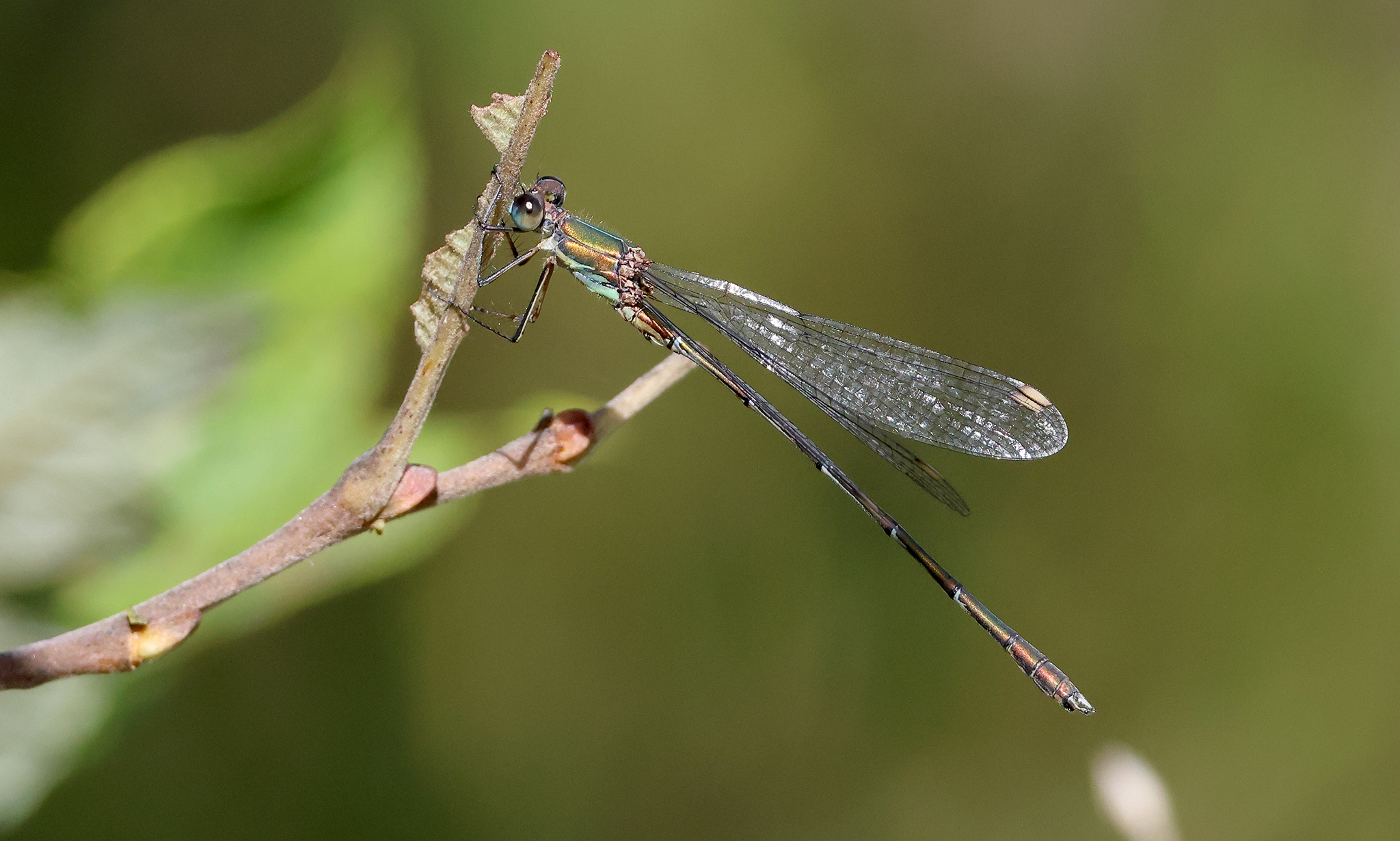
A fall of Chiffchaffs mainly recorded on the Point with reports of loads of Chiffchaffs in private gardens however, Chiffchaffs also in the willows across the RSPB reserve. The Pectoral Sandpiper and the second juvenile White-Winged Black Tern of the autumn along with 12 Black Terns remain on ARC and Burrowes Pit respectively. Two Willow Emerald damselflies were found along the Hanson Track by Dave Brown. A new damselfly species for me in the area and whilst recorded annually at the Point or Long-Pits in low numbers, a species that is scarce on the RSPB Reserve. Four Garganey and the adult Glossy Ibis on ARC and eight Cattle Egrets at Boulderwall. Duck numbers are decreasing after the high counts in July and August.
In the late afternoon a Whinchat and 12 Stonechats at the Affinity Water Works.
The sunny spells brought out some butterflies with Small Copper, Red Admiral and Small White being recorded.


This adult Glossy Ibis appeared on August 21st the previous 2024 record on the peninsula being a single on June 29th.

Juvenile Pectoral Sandpiper on ARC


Willow Emerald Damselfly

Small Copper

Our second juvenile White-winged Black Tern on Burrowes Pit.

One of the 12 Black Terns on Burrowes Pit.


Tuesday, 10 September 2024

Scotney Sand Pit and RSPB Dungeness

Water levels at Scotney Sand Pit looked ok during a visit this morning however, wader numbers were down compared to recent weeks with only three Green Sandpipers, 14 Avocet, one Little-ringed Plover, three Ringed Plovers, a Ruff, and a Dunlin. Teal and Shoveler were also present with counts of 73 and 13 respectively.
The White-winged Black Tern and at least 11 Black Terns were still feeding on Burrowes at the RSPB Reserve and the juvenile Pectoral Sandpiper re-appeared on ARC after disappearing yesterday afternoon. The adult Glossy Ibis and two Garganey were also still present.

Annoyingly a twin engine aircraft from Lydd Airport flew low over ARC and disturbed all the duck causing them to fly. 

Juvenile Pectoral Sandpiper

Juvenile Pectoral Sandpiper
Juvenile Black Terns